Trending Now
  • Independence Day Op-Ed Frames Consumer Legal Funding as the Freedom to Pursue Justice
LFJ Conversation

An LFJ Conversation with Ken Epstein and Matt Leland, Co-Founders, Backlit Capital Solutions

By John Freund |

An LFJ Conversation with Ken Epstein and Matt Leland, Co-Founders, Backlit Capital Solutions

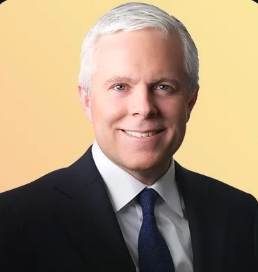
Ken Epstein is a co-founder and principal of Backlit Capital Solutions and brings 25 years of experience in bankruptcy law, commercial litigation, restructuring and finance. Ken leverages his deep industry expertise to provide tailored solutions for companies, law firms, investors, and individuals navigating complex litigation and financial restructuring challenges.

Prior to co-founding Backlit, Ken was a Senior Investment manager and Legal Counsel in the New York office of Omni Bridgeway, a legal finance and risk management company, where he led the company’s U.S. insolvency litigation finance platform. In this role, he originated, structured, and managed a diverse portfolio of legal assets, playing a key role in many of the firm’s most significant transactions. Prior to his tenure at Omni Bridgeway, he was a managing director at MBIA, a public financial services company, where he led large-scale initiatives and crisis management efforts. He was also on the board of directors of MBIA Services Corp. Ken started his career as a lawyer at Cadwalader, Wickersham & Taft, where he specialized in financial restructuring and corporate bankruptcy law.

Ken graduated from Brooklyn Law School (cum laude) and holds an accounting degree from the University of Maryland. Ken has also served as an adjunct professor of bankruptcy law at Cardozo Law School. He has been recognized in Who’s Who Legal: Thought Leaders – Third Party Funding Guide and the LawDragon Global Restructuring Advisors & Consultants Guide.

Matt Leland brings over 20 years of experience in commercial litigation and litigation finance to Backlit Capital Solutions.  Most recently, Matt was as an Investment Manager and Legal Counsel in the Washington, D.C. office of Omni Bridgeway.  There, Matt sourced and evaluated funding opportunities, negotiated deal terms, and monitored funded matters through to resolution.

Before Omni Bridgeway, Matt served as partner and as a commercial litigator for nearly two decades at AmLaw 100 firms King & Spalding LLP and McDermott Will & Emery LLP, experienced in all facets of civil litigation, including appeals, trials, arbitrations, and mediations. He successfully represented corporate clients engaged in diverse legal issues including government reimbursement claims, contractual disputes, unfair business practices, deceptive trade practices, civil RICO, and trademark infringement. Over his career, Matt helped clients recover hundreds of millions in damages and has extensive experience working closely with corporate executives and in-house counsel to develop budgets, fee structures, and strategies for all phases of litigation, including early case assessment, discovery, trial, and settlement. He has repeatedly been recognized in peer-reviewed guides including The Best Lawyers in America, Legal 500, and Super Lawyers.

Matt received his Juris Doctor from Georgetown University Law Center, where he was the Publications Director for The Tax Lawyer and The State and Local Tax Lawyer. He earned his B.A. in Political Science from the University of New Hampshire.

While earning his law degree, Matt was as a top aide for former U.S. Senator and Congressman John Sununu, after serving previously as the Deputy Campaign Manager on Mr. Sununu’s first campaign.

Below is our LFJ Conversation with Ken and Matt: Could you elaborate on Backlit Capital’s approach to fundraising support for law firms, particularly start-ups, and what key factors contribute to successful fundraising in today’s market?

There’s been no better time to be a law firm seeking financing, as new investors enlarge the funding universe and options multiply. However, the landscape can be daunting and complex.  We invite those firms to take advantage of our experience.  We have spent years on the funding side of negotiations – evaluating claims and risks – and understand the nuanced distinctions between a fundable investment and one that gets passed over by litigation funders, lenders, and alternate investment sources.

Rather than simply connecting lawyers to potential sources of capital, we collaborate with firms, no matter their experience level, to implement comprehensive strategies that achieve specific financing goals.  We showcase the potential of their assets with smart strategic positioning and precise financial modeling to address the investment concerns of potential funding sources. And to drive successful fundraising, we help firms provide transparency with risk profiling, highlight their operational credibility, and seize upon tactics to mitigate unpredictability so that the firm can showcase high-grade opportunities.

Finally, to ease the burden of this process, we provide end-to-end transaction management.  We take on all of the complex and time-consuming tasks associated with legal funding so that clients can focus on providing first-rate legal services.

With the increasing complexity of legal finance, what innovative risk management strategies does Backlit Capital employ to mitigate potential losses for investors and lenders?

We appreciate that these are high-stakes transactions for both the investor and the claimant and our review is disciplined, transparent and robust. Each transaction is different and we provide additional services depending on the client’s need, but here’s how we approach every opportunity:

  • Early-Stage “Pressure Testing”:  We test key legal theories, jurisdictional issues, damages, and enforcement risk with input from independent experts before approaching funders. Backlit will only move forward with quality transactions that bring clear value to all parties. Our funders know that we’ve done the work and stand behind every law firm and claimant we represent.
  • Contingent Insurance Products:  Whether for judgment preservation or adverse cost coverage, we’ll provide detailed financial modeling and help source appropriate products that can reduce litigation risk and, in turn, improve pricing or expand access to capital.
  • Post-funding Oversight:  We offer ongoing monitoring of case progress, legal developments, and emerging risks.  Our proactive oversight, combined with strategic advisory services, allow for early adjustments to protect investments and provide better measures of valuation as the investment moves through the litigation process. Further services include exploration of secondary market options when an investor wants to acquire or monetize a litigation asset.

By combining deep legal and financial expertise with market tools, Backlit ensures that risk is not just identified, but actively managed.   

How does Backlit Capital stay ahead of emerging trends in legal finance, and what future developments do you anticipate will significantly impact the industry?

We’re always focused on potential shifts in the market.  At Backlit, our experience comprises not only litigation finance, but also decades of credit analysis, restructuring, commercial litigation, and government policymaking.  This expertise enables us to identify how trends in financial, legal, and public sectors might influence litigation funding, and this positions Backlit extremely well for what we see as the biggest catalyst in the market – the addition of significant new funding capacity driven by new investors in the sector, like hedge funds, family offices and middle-market institutions. This provides a great opportunity for claimants and law firms looking for funding, but also injects unprecedented complexity into the marketplace.

At Backlit, we developed our services to not only identify, but capitalize, on opportunities for clients on either side of these transactions. Our connections with and understanding of the private capital space allow Backlit to find and structure deals that address the financial, operational and reporting requirements of all parties. As this market continues to grow, we’re positioned to create exciting new investment opportunities for funders and drive strong deals for clients seeking capital.

Can you share insights into a recent successful deal Backlit Capital facilitated, highlighting the unique challenges and solutions implemented?

We expect that over time, most of our business is likely to be on the brokerage side and we are actively working with numerous clients to develop solutions to their diverse funding needs. In the short period since our launch there are two particular engagements that demonstrate the breath of the services we offer beyond traditional funding.

In the first, we have been engaged as an expert in a multibillion-dollar, high-profile bankruptcy litigation to assist a private equity client in the valuation of a complex litigation asset. Backlit has provided counsel, analytics and testimony in support of the client’s position. Our broad in-house capabilities and market expertise allow us to quickly analyze and deliver valuations that support our clients’ goals and survive deep scrutiny.

We have also been engaged on a project basis to help a large multi-billion dollar investment fund evaluate, structure and close a large loan transaction backed by a legal claim.  The borrower’s existing lending relationship ended when the share collateral was involuntarily converted into a legal claim due to litigation surrounding a merger of the entity that had issued the shares.  This was a time sensitive transaction with high stakes for all involved. Selecting legal counsel, working through conflicts, providing assistance on the unique features of legal finance – a discreet asset class – as part of the diligence and in-house deal team was a rewarding experience.

In the context of distress and insolvency, what specific pre- or post-Chapter 11 assistance strategies have proven most effective for Backlit Capital in maximizing creditor trust and claims management?

While we work across sectors, we have a proven specialty in maximizing litigation assets for entities in financial distress and insolvency. Claimants facing the challenges of bankruptcy often have few other meaningful assets, and are extremely capital-restricted in their ability to effectively pursue damages. Additionally, these parties have fiduciary duties that need to be satisfied fully and transparently. Running a robust marketing process and ensuring best pricing is in the best interest of the estates, will enable the trustees to defend their fiduciary decisions if challenged, and given the multiple interests in the case, ensure a fair process and optimization of assets.

With such complex interests to manage, these clients demand specialized approaches that differ significantly from traditional commercial litigation support.

  • Funding for the debtor or trustee: We can help a debtor, bankruptcy trustee or litigation trustee secure funding to pursue legal claims (e.g., fraudulent transfer, preference, breach of fiduciary duty) or help support ongoing administrative costs. Our process ensures all parties are comfortable with transparency, discipline and reporting.
  • Funding for creditors and committees: We can help creditors and committees push back on a debtor’s attempt to bury valuable claims because they don’t benefit management or insiders.  Consulting with us early in the process can help add negotiating leverage and drive up recoveries.
  • Sale or assignment: When parties want to divest all or part of an estate asset, we can help sell or assign litigation claims and judgments, accelerating recoveries and ensuring a minimum return to stakeholders.
  • Post-confirmation litigation trusts: When establishing a post-confirmation trust to investigate and prosecute claims, we can help drive a competitive process, ensuring that the trust is adequately funded and that key professionals are fairly compensated for their work.

About the author

John Freund

John Freund

More LFJ Conversations

View All
LFJ Conversation

An LFJ Conversation with Chris Janish, CEO, Legal-Bay Lawsuit Funding

Chris Janish, CEO of Legal-Bay, has spent two decades in pre-settlement funding, guiding Legal-Bay from a pure broker model to a hybrid structure and, most recently, to a fully direct funder operating off its own balance sheet.

Below is our LFJ Conversation with Chris Janish:

You've been in pre-settlement funding for 20 years, longer than most people in this space. How has the consumer legal funding industry changed from when you started to where it is today, and what's been the biggest shift you didn't see coming?

I think the biggest change is that documents and files move so much faster now with technology. Years ago we would have to fax major legal and medical files over fax and it was just maddening. Contracts are signed via electronic services too. Technology has made it easier to be efficient and scale. I see an industry that is only in its second quarter century of life — still much growth to go. I think products will get even more creative and advantageous for both plaintiffs and lawyers to advance cases with more liquidity and flexibility. The biggest thing I see coming is major consolidation — there is tremendous capital coming into the business who love the yields and want more credit lending capacity. Larger companies who are having a hard time scaling will start to acquire or "roll up" smaller companies.

Legal Bay started as a broker, evolved into a hybrid broker/funder model, and is now moving to fund entirely on your own balance sheet. Walk us through that evolution: what drove each transition, and what does going fully direct mean for the plaintiffs you serve?

I love this question, because it really takes us into what Legal-Bay is all about. Which is we were built on customer service. I've run the entire gamut in industry. In 2006 I started as an investor looking at this model, which was similar to my experience in running a hedge fund on Wall Street with similar convertible features. Then in 2010 I came on as a marketing consultant, driving leads and developing processing for Legal-Bay to be packaged for funding evaluation. By 2011, I decided to buy the Legal-Bay assets and became an owner in a business that had no money to invest directly in cases, but I was able to forge a partnership with a Canadian bank who had more flexibility than US banks at the time. (For the early part of this business it was very hard to get institutional capital due to restrictions and general uncertainty of the collateral.) Not having the capital, the only way to retain a lead was to ensure them that we would provide them the best customer service out there and work their cases until exhaustion. Legal-Bay made a name for themselves and the brand early on.

By 2018 we had made investments and partnerships in 2 startup funds, guided by my knowledge, that saw total AUM over $100MM. During those times we focused on origination and intake and let our partners work on capital raising. So, not having all our own capital made us part broker, part funder — hence why I said hybrid. All through it, we maintained our identity — and still do to this day — that when you call Legal-Bay you will always get a live person. Ultimately in 2023 we decided, after 5 years of a successful joint venture, to sell out of our profit share and create a liquidity event for Legal-Bay that gave us enough capital to go on our own and have a full end-to-end process right in our office from intake to funding to servicing, while still never losing our key identity.

You're looking to raise $25 million to fuel this next phase. What does that capital allow Legal Bay to do that it couldn't do before, and what are institutional investors looking for when they evaluate a consumer legal funding platform in 2026?

We have outgrown our capital needs and are looking to double our AUM in the next 2-3 years. The only way to grow in this business is you need to be putting out more money than what is coming back. You always want to have good portfolio turnover to show you are booking profits and picking the right cases, but in order to scale and grow, your originations need to be higher than your inflows coming back. That's what the capital is going to allow us to do — aggressively market in all 3 revenue channels we have and build core attorney relationships at the right pricing. And you guessed it: customer service.

Institutional investors are looking to evaluate every single last detail of your operation. We were lucky to have partners in the past that we basically outsourced this to, but I learned a lot through that process when I would pitch in with policy and procedures. So, we have a team now that is fully prepared with a full-scale data room that gives any investor a full understanding of any part of our business with a point and click.

New York just enacted the Consumer Litigation Funding Act, Kansas passed its own version, and more states are moving toward regulation. As someone who's operated through every phase of this market, do you see regulation as a competitive advantage for established players like Legal Bay, or does it create new headaches?

This is a double-edged sword and you hit on a chord that many of the smaller or medium-sized companies are going through. I'll take you back to when I started in this business and a new investor asked me, "what keeps you up at night?" And I said "regulation" — we had no idea which way the wind was going to blow. Litigation funding was a new frontier. Now, regulation is totally providing credibility to the industry, and the only thing that keeps me up at night is making sure our compliance team is up to speed on each and every state's compliance requirements. It takes a lot of resources and can create those headaches at times, but states are now giving us a privilege to service their consumers, and it is our job to ensure we are doing everything perfectly. Being a part of ARC and seeing what Eric Schuller has done for consumer funding throughout the country — going state to state in passing advantageous regulations — has been very inspiring. I am excited about building off of this in even more states in the future, despite the obstacles.

I do have one thing I would like to see, and that is getting a federal contract or guideline for litigation funding. With the nationalization of technology, it really makes more sense that there is one standard federal contract that works for all. That would remove a lot of those headaches.

Looking ahead, where do you see the biggest growth opportunities in consumer legal funding over the next three to five years, and how is Legal Bay positioning itself to compete against both the large institutional funders moving downstream and the smaller shops still brokering deals?

As the US population grows, more lawsuits are coming into the system and the backlog of cases each year grows. So the market breadth is growing, and that trend will continue. Additionally, I see a huge market in commercial funding for small to medium-sized deals — that is a market that is greatly underserved and something that Legal-Bay is working on specifically to develop that product further. Also, with the advent of better technology — AI, smart phones, and medical science — cases are much easier to be made based on strong liability and sciences. So it is becoming harder for defense teams to fight clear and convincing evidence or proof. Legal-Bay has prided itself on investigating emerging litigations in mass torts and being the first funder in, and we see this as a leg up for us in competing against the best in the future as well.

LFJ Conversation

An LFJ Conversation with John Lopes, Head of Specialty Legal Banking, First Horizon

By John Freund |

John Lopes is a market-leading bank executive and recognized authority in financial solutions for the plaintiff-side legal industry. As Senior Managing Director and Head of Specialized Legal Banking at First Horizon Bank, he leads a national platform focused on delivering capital, deposit, and technology solutions to contingency-based law firms, mass tort practices, claims administrators, and Qualified Settlement Funds (QSFs).

John began his career over 20 years ago advising AM Law firms, building a strong foundation in traditional legal banking and developing deep expertise in the operational and financial dynamics of large defense-side practices. He later held leadership roles at institutions including Citibank, Wells Fargo, and Western Alliance Bank, where he managed significant portfolios, built high-performing teams, and executed strategic growth initiatives across the legal vertical.

Over a decade ago, John identified a critical gap in the market and shifted his focus to the plaintiff side of the bar—where firms face unique challenges related to contingent revenue, cash flow volatility, and complex settlement structures. Since then, he has become a trusted advisor to many of the nation's leading plaintiff law firms and ecosystem partners, structuring sophisticated credit facilities, supporting billions of dollars in settlement flows, and delivering innovative banking solutions across the full lifecycle of litigation.

John is known for his ability to bridge capital, technology, and legal strategy—partnering with law firms, claims administrators, and litigation finance providers to drive growth, enhance liquidity, and create operational efficiency at scale. Through his leadership, he continues to position First Horizon as a premier banking partner to the plaintiff bar, bringing institutional-grade capabilities to a rapidly evolving segment of the legal industry.

He holds a background in financial markets from Yale University and has continued to build on that foundation through executive education with the Yale School of Management.

Below is our LFJ Conversation with John Lopes:

What gaps in the settlement and mass tort landscape led you to build a dedicated Settlement Services platform?

Historically, most banks approached settlement accounts as transactional escrow relationships rather than as a specialized vertical requiring tailored infrastructure. As mass tort and class action settlements have grown in size and complexity, that model became insufficient.

We saw several structural gaps:

  • Lack of dedicated infrastructure for high-volume sub-accounting and audit transparency
  • Limited understanding of QSF governance, fiduciary responsibilities, and multi-party oversight
  • Manual disbursement processes that created inefficiencies and risk
  • Inflexible credit solutions for contingency firms managing large case inventories

We built our Specialty Legal Banking group to address those gaps holistically — combining dedicated settlement banking, digital sub-accounting, modern disbursement capabilities, and tailored financing solutions under one coordinated platform.

Rather than treating settlements as ancillary deposits, we treat them as a highly specialized ecosystem requiring neutrality, transparency, and purpose-built technology.

Courts increasingly demand transparency and auditability. How do you see expectations evolving around reporting and fiduciary accountability?

Expectations are rising meaningfully. Judges and special masters now expect:

  • Real-time visibility into balances
  • Clear segregation of funds at the claimant or fee level
  • Transparent interest allocation methodologies
  • Clean audit trails across every transaction

In complex QSFs, accountability is no longer theoretical — it must be demonstrable.

We've responded by building a platform that allows structured sub-accounting at scale, defined user permissions (analyst vs. approver roles), exportable audit logs, and reporting that aligns with court oversight requirements.

The future standard will be near real-time transparency, not quarterly reconciliation. Specialized banks must offer specialized infrastructure to the settlement process — not just holding funds.

What are the most significant fraud or AML risks facing settlement administrators today, and how can institutions mitigate them without slowing distributions?

The scale and speed of modern distributions introduce new risk vectors:

  • Synthetic identity and claimant impersonation
  • Payment redirection and ACH fraud
  • Social engineering attacks targeting administrators
  • Sanctions and cross-border payment compliance risk

The key is not adding friction — but adding intelligent controls. Financial institutions must offer:

  • Multi-layer payment verification protocols
  • OFAC and sanctions screening at both onboarding and disbursement
  • Segregated user permissions and dual-approval workflows
  • Positive pay and transaction monitoring services

Technology should accelerate payments while reducing exposure. The answer is not slowing distributions — it's modernizing controls around them.

Claimants now expect faster access to funds and more flexibility in how they receive payments. How is innovation reshaping the claimant experience?

The claimant experience is evolving dramatically.

Traditional paper checks are increasingly insufficient. Claimants now expect options — ACH, prepaid cards, digital wallets, and other electronic modalities — delivered quickly and securely.

Real-time rails and digital disbursement platforms are reshaping expectations around:

  • Speed
  • Choice
  • Transparency of payment status

At the same time, the institution must provide tools so that flexibility coexists with compliance and oversight.

The institutions that succeed will be those that can offer multiple payment modalities within a controlled, audit-ready environment. That's where innovation truly adds value — not just convenience, but structured efficiency.

As litigation finance and aggregate settlements continue to grow, what role should specialized settlement banks play in reinforcing neutrality and trust?

As capital flows increase in mass tort and aggregate litigation, neutrality becomes even more critical. A specialized settlement bank must function as a stabilizing counterparty amid multi-party financial arrangements. In large aggregate settlements — especially where litigation finance is involved — clarity around control, reporting, and fee segregation becomes paramount.

Our role is not to influence outcomes, but to provide a compliant, transparent, and scalable platform that reinforces trust across all stakeholders: plaintiffs' firms, defense counsel, administrators, courts, and capital providers.

Ultimately, trust in the settlement process depends on financial infrastructure that is purpose-built for complexity — and governed by strong compliance standards.

LFJ Conversation

An LFJ Conversation with John Lopes, Head of Specialty Legal Banking, First Horizon

John Lopes is a market-leading bank executive and recognized authority in financial solutions for the plaintiff-side legal industry. As Senior Managing Director and Head of Specialized Legal Banking at First Horizon Bank, he leads a national platform focused on delivering capital, deposit, and technology solutions to contingency-based law firms, mass tort practices, claims administrators, and Qualified Settlement Funds (QSFs).

John began his career over 20 years ago advising AM Law firms, building a strong foundation in traditional legal banking and developing deep expertise in the operational and financial dynamics of large defense-side practices. He later held leadership roles at institutions including Citibank, Wells Fargo, and Western Alliance Bank, where he managed significant portfolios, built high-performing teams, and executed strategic growth initiatives across the legal vertical.

Over a decade ago, John identified a critical gap in the market and shifted his focus to the plaintiff side of the bar—where firms face unique challenges related to contingent revenue, cash flow volatility, and complex settlement structures. Since then, he has become a trusted advisor to many of the nation's leading plaintiff law firms and ecosystem partners, structuring sophisticated credit facilities, supporting billions of dollars in settlement flows, and delivering innovative banking solutions across the full lifecycle of litigation.

John is known for his ability to bridge capital, technology, and legal strategy—partnering with law firms, claims administrators, and litigation finance providers to drive growth, enhance liquidity, and create operational efficiency at scale. Through his leadership, he continues to position First Horizon as a premier banking partner to the plaintiff bar, bringing institutional-grade capabilities to a rapidly evolving segment of the legal industry.

He holds a background in financial markets from Yale University and has continued to build on that foundation through executive education with the Yale School of Management.

Below is our LFJ Conversation with John Lopes:

What gaps in the settlement and mass tort landscape led you to build a dedicated Settlement Services platform?

Historically, most banks approached settlement accounts as transactional escrow relationships rather than as a specialized vertical requiring tailored infrastructure. As mass tort and class action settlements have grown in size and complexity, that model became insufficient.

We saw several structural gaps:

  • Lack of dedicated infrastructure for high-volume sub-accounting and audit transparency
  • Limited understanding of QSF governance, fiduciary responsibilities, and multi-party oversight
  • Manual disbursement processes that created inefficiencies and risk
  • Inflexible credit solutions for contingency firms managing large case inventories

We built our Specialty Legal Banking group to address those gaps holistically — combining dedicated settlement banking, digital sub-accounting, modern disbursement capabilities, and tailored financing solutions under one coordinated platform.

Rather than treating settlements as ancillary deposits, we treat them as a highly specialized ecosystem requiring neutrality, transparency, and purpose-built technology.

Courts increasingly demand transparency and auditability. How do you see expectations evolving around reporting and fiduciary accountability?

Expectations are rising meaningfully. Judges and special masters now expect:

  • Real-time visibility into balances
  • Clear segregation of funds at the claimant or fee level
  • Transparent interest allocation methodologies
  • Clean audit trails across every transaction

In complex QSFs, accountability is no longer theoretical — it must be demonstrable.

We've responded by building a platform that allows structured sub-accounting at scale, defined user permissions (analyst vs. approver roles), exportable audit logs, and reporting that aligns with court oversight requirements.

The future standard will be near real-time transparency, not quarterly reconciliation. Specialized banks must offer specialized infrastructure to the settlement process — not just holding funds.

What are the most significant fraud or AML risks facing settlement administrators today, and how can institutions mitigate them without slowing distributions?

The scale and speed of modern distributions introduce new risk vectors:

  • Synthetic identity and claimant impersonation
  • Payment redirection and ACH fraud
  • Social engineering attacks targeting administrators
  • Sanctions and cross-border payment compliance risk

The key is not adding friction — but adding intelligent controls. Financial institutions must offer:

  • Multi-layer payment verification protocols
  • OFAC and sanctions screening at both onboarding and disbursement
  • Segregated user permissions and dual-approval workflows
  • Positive pay and transaction monitoring services

Technology should accelerate payments while reducing exposure. The answer is not slowing distributions — it's modernizing controls around them.

Claimants now expect faster access to funds and more flexibility in how they receive payments. How is innovation reshaping the claimant experience?

The claimant experience is evolving dramatically.

Traditional paper checks are increasingly insufficient. Claimants now expect options — ACH, prepaid cards, digital wallets, and other electronic modalities — delivered quickly and securely.

Real-time rails and digital disbursement platforms are reshaping expectations around:

  • Speed
  • Choice
  • Transparency of payment status

At the same time, the institution must provide tools so that flexibility coexists with compliance and oversight.

The institutions that succeed will be those that can offer multiple payment modalities within a controlled, audit-ready environment. That's where innovation truly adds value — not just convenience, but structured efficiency.

As litigation finance and aggregate settlements continue to grow, what role should specialized settlement banks play in reinforcing neutrality and trust?

As capital flows increase in mass tort and aggregate litigation, neutrality becomes even more critical. A specialized settlement bank must function as a stabilizing counterparty amid multi-party financial arrangements. In large aggregate settlements — especially where litigation finance is involved — clarity around control, reporting, and fee segregation becomes paramount.

Our role is not to influence outcomes, but to provide a compliant, transparent, and scalable platform that reinforces trust across all stakeholders: plaintiffs' firms, defense counsel, administrators, courts, and capital providers.

Ultimately, trust in the settlement process depends on financial infrastructure that is purpose-built for complexity — and governed by strong compliance standards.