Trending Now
Community Spotlights

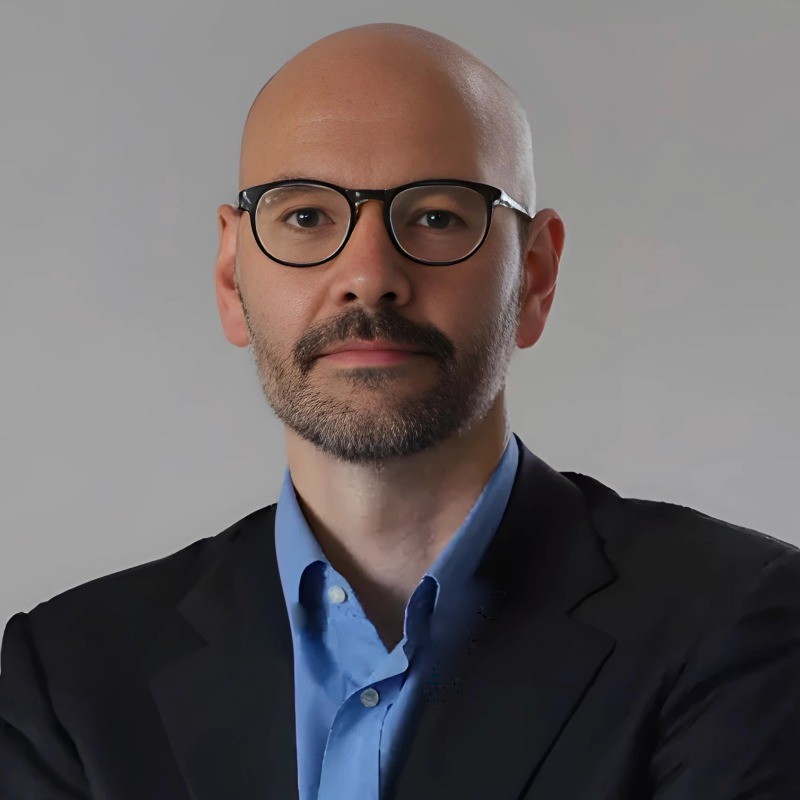
Member Spotlight: Davide De Vido

By Davide De Vido |

Member Spotlight: Davide De Vido

Davide De Vido is an Italian lawyer with significant expertise in commercial and company law consultancy and disputes. In 2000, Davide started his career as an in-house counsel for a leading industrial group in the production and sale of building materials, gaining experience in complex transactions and corporate dispute resolution.

Subsequently, he assumed the same role for a leading company in the field of production and sale of eyewear, and after these two experiences, Davide founded his own law boutique.

In 2019, Davide entered in the litigation funding industry and founded FiDeAL®

Company Name and Description: FiDeAL® is a full consultancy company of litigation finance (funding and insurance) solutions that works across Europe with a particular focus on the Italian legal market.

We assist those seeking financial solutions to pursue single cases, and also help create portfolio claims. We collaborate with law firms, associations, other NG organizations, companies and litigation funds or investors to structure complex projects.

Last June, through collaboration with expert and university professors, FiDeAL has established its environmental, climatic, and ESG law department to offer the highest level of expertise in preparing, structuring, and conducting in-depth legal and economic analyses of projects, making the funding process more efficient and effective.

Company Websitewww.fideal.it

Year Founded:  2019

Headquarters:  31020 San Vendemiano (Treviso), Italy

Area of Focus: Advising and brokering all types of litigation finance related matters. Since June 2024, FiDeAL has been working in environmental/climate/ESG law to help protect the planet and improve people’s quality of life and business relations.

Member Quote: We dream of a world where access to justice is democratized and easily accessible globally for each individual, company or entity.
About the author

Davide De Vido

Davide De Vido

Commercial

View All

Merricks Urges UK Court to Reject Innsworth’s Challenge Over £200M Mastercard Settlement Distribution

By John Freund |

The class representative in the Merricks v Mastercard collective claim has urged a London court to reject litigation funder Innsworth Advisors' judicial review of the £200 million settlement distribution, in what observers describe as the first substantive test of a Competition Appeal Tribunal settlement decision.

As reported by Law360, Walter Merricks's legal team told the High Court on Wednesday that Innsworth has already received an adequate return from the CAT-approved settlement and that its challenge should be dismissed. Innsworth argued earlier in the week that the distribution scheme is "illogical" and "flawed," contending that the tribunal failed to properly assess the funder's recovery.

The CAT had divided the settlement into three pots. Pot 1, totalling £100 million, is ring-fenced for class members. Pot 2, approximately £45 million, covers Innsworth's litigation costs. Pot 3, approximately £55 million, allocates roughly £23 million to Innsworth as the profit element of its return, bringing its total recovery to around £68 million. Innsworth contends that this amounts to only a 0.5x return on more than £45 million invested, and disputes the methodology used to set the figure.

The case has drawn close attention from the UK funding sector. A judicial review of a CAT-sanctioned distribution could establish important parameters around how courts assess funder returns in collective proceedings, particularly at a moment when the tribunal has signaled heightened scrutiny of certification and take-up in entrepreneurial class actions.

Germany’s Federal Court of Justice Imposes New Limits on Funders and Claim Aggregators in $590M Trucks Cartel Ruling

By John Freund |

The Bundesgerichtshof (BGH), Germany's Federal Court of Justice, has issued a closely watched judgment in the long-running Trucks Cartel litigation that upholds the use of collective claims vehicles in principle but sets significant guardrails around third-party litigation funding and claim aggregation.

As reported by Leaders League, the May 12, 2026 ruling addressed claims arising from the European Commission's 2016 cartel decision, brought on behalf of more than 3,000 entities across 21 jurisdictions and seeking approximately US$590 million. The BGH confirmed that cartel damages claims may be collectively aggregated and enforced by registered claims collection entities, reinforcing collective redress mechanisms in German private antitrust litigation.

The court imposed two material limits. First, third-party funders cannot exercise control that compromises the claims vehicle's obligation to act exclusively in the interests of the assignors, a conflict-of-interest standard that goes to funder governance rights. Second, claims aggregation cannot obstruct effective judicial review; excessive volume or complexity that renders proper assessment "impracticable" may violate the German Legal Services Act and result in dismissal for procedural abuse.

The BGH overturned the appellate decision and remanded the matter, directing the lower court to examine whether the funding structure created incompatible conflicts and, if the assignments survive, to divide claims within six months. The decision is expected to shape the architecture of funded collective antitrust actions across Europe, particularly in jurisdictions modelling Germany's claims-collection framework.

Michigan House Passes Third-Party Litigation Funding Bill 60–45, Sending Measure to Democratic Senate

By John Freund |

The Michigan House of Representatives has approved House Bill 5281, a Republican-sponsored measure that would impose registration, disclosure, and contracting restrictions on third-party litigation funders operating in the state, advancing the bill to a Senate where Democrats hold a narrow majority.

As reported by The Center Square, the bill cleared the chamber on a 60–45 vote, with four Democrats joining Republicans in support: Tulio Liberati, Peter Herzberg, Angela Witwer, and Will Snyder. Sponsor Rep. Mike Harris framed the legislation in floor remarks by asking, "Who does it benefit to allow outside investors to influence decisions in Michigan courtrooms?"

The bill requires litigation funders to register with the Department of Insurance and Financial Services, pay a $10,000 application fee, and file annual reports on funding activity. It mandates a ten-day consumer cancellation window for funded contracts, prohibits kickbacks and referral fees, prohibits funder influence on case strategy, bans funding by foreign adversaries, and imposes caps on funder spending and recoveries from awards.

Backers cited industry analyses suggesting third-party litigation funding raises household costs through higher prices and lost tax revenue. The measure now heads to a Senate where Democrats hold an 20–18 majority and where the bill's path is uncertain. The House passage adds Michigan to the list of states considered most active on third-party funding regulation, alongside parallel efforts under way in Colorado, Florida, and Pennsylvania.